Wednesday, August 22, 2018

Set Up Manufacturing WFOEs In ShenZhen China

The Manufacturing WFOE Registration process checklist.jpg

Shenzhen is located on the western coast of the Pacific Ocean and at the central section of the north-south coastline of China. Facing the opportunities and challenges of the 21st century, Shenzhen has set its long-term strategic objectives for social and economic development. In near future, Shenzhen is planned to become one of the international economic, financial and trade centers of the world.

As the window of China's reform and opening up, Shenzhen is the first special economic zone established by China's reform and opening-up policy. Shenzhen came in second as the most economically competitive cities in the world in 2016.

Setting up a company in Shenzhen is a good choice for companies that are in computer software, IT, microelectronics and components, video and audio products, electromechanical integration, and key projects of light industry and energy. 

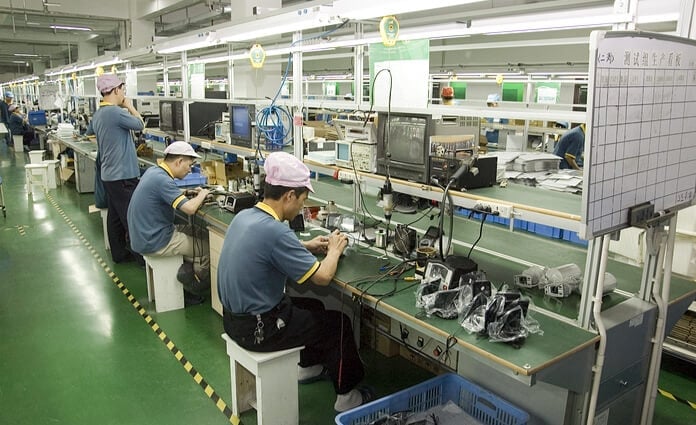
Shenzhen is the epicenter for electronic manufacturing services. Here, you can find suppliers for everything from power banks to VR headsets. The ecosystem is also very open. Even the smallest startup will find suppliers that are interested in working with them. Shenzhen is no doubt the ideal place for electronic manufacturing services, PCB design and prototyping, and electronic OEM projects.


As the seven strategic emerging industries, the Internet, new materials, biology, new energy, energy conservation and environmental protection, cultural creativity, new generation of information technology and the four future industries i.e. marine economy, aerospace, robot wearables and intelligent equipment and life health are gaining momentum.

If you want to move up the supply chain in ShenZhen, or shift your manufacturing to ShenZhen China to reduce overall cost, registering a ShenZhen manufacturing WFOE (wholly foreign owned enterprise) is the way to take it to the next level. There are different WFOEs for different purposes, and in this case we’ll look in detail at the ShenZhen manufacturing WFOE registration process...


Why you need a manufacturing WFOE

In the past, foreign companies aiming to manufacture their products in China would usually have to enter into a joint venture with a local company. This allows an easy route into China with a company which already has established infrastructure, and is still necessary for certain industries, such as Automotive and Pharmaceutical; but can lead to a loss of control, or disagreements with your local partner.
 
A manufacturing WFOE allows you to set up your own manufacturing operations within China, but with no connection to local companies whatsoever. This offers increased business mobility, better protection of IP, and a level playing field with local companies (as your Chinese company is equal in terms of being able to trade in China).
 
It’s good to keep in mind that  the company setup can only operate within the business scope approved by the authorities. China may provide incentives and tax breaks for foreign manufacturing companies, however, the rules and regulations are complex so professional guidance from a partner like TCBC is recommended.


How long does the Manufacturing WFOE Registration process take?

The exact duration of registering a manufacturing WFOE depends on several factors and the timeframes can differ, mainly due to a variety of certificates demanded by the Chinese government. These certificates include the Environment Safety Certificates, Energy Impact Assessment Approval and Fire Protection Approval, among others. Most companies quote 3-9 months, with the average time being around 8 months, but considering your paperwork is in order the process can be done much quicker with proper assistance. The good news is a lot of the process can be done via email and courier services, so you can start the process from wherever you are and travel to China once the process has been initiated.
 
There are 4 phases for registering a Manufacturing WFOE. If working with an agency, your account manager will guide you through each step, and make sure that your documents are correct:


Phase 1: Preliminary Project Application and Name Approval

The first thing you need to do is make sure your proposed company name is available, fill in the initial forms and get a reference letter from your bank.
Documentation:
  • Project application based on the feasibility study;
  • Environment impact, self-evaluation form(this is important for a manufacturing company);
  • Site selection form for the project (Including lease agreement and ownership certificate of real estate);
  • Name pre-approval application with five optional company names and business scope description;
  • Letter of authorization for application of business Name;
  • Bank reference letter;

NOTE: You will receive an approval letter and a business name approval notice within 5 working days after submitting the documents mentioned above, only then can you proceed to Phase 2.

Phase 2: Official Application for Government Approval

 The Manufacturing WFOE Registration process checklist 1.jpg


In phase 2 of the registration process we move onto government approval, and take the first steps to make your WFOE official.
Documentation:
  • Feasibility report of project;
  • Environmental evaluation report;
  • Article of association (note: this is the key document that lays out equity terms);
  • List of equipment & raw materials to be imported (if any);
  • List of names for WFOE board members & official certificates of appointment;
  • Names of WFOE General Manager, Deputy Manager, Supervisor and certificates of appointment;
  • Copies of ID or Passport of Board Members, Supervisor and General Manager

NOTE: It normally takes around 20 days to get your certificate of approval. The certificate of approval expires 30 days after issuance.

Phase 3: Application for Business License

Now that we have your certificate of approval in hand,  we can move on to register for your business license.
Documentation:
  • Application for establishment and registration of FIE (foreign investment enterprises);
  • Form for registration of “legal representative” and “evaluation” form (declaring no illegal activities, criminal records etc.);
  • Copies of ID or Passport of Board Members and General Manager & Deputy General Manager; résumé & photos of legal representative certified by Chinese Embassy (if outside of China);
  • Article of association of WFOE;

NOTE: After Phase 3, the Business license will be issued in approximately 15 days and the WFOE will be officially established. You must open a local bank account and fulfil your registered capital obligations and officially register with various government departments as stated below.


Phase 4: Registration with Different Authorities

Your WFOE is now officially established, the next step is to get your bank account up and running and register with the various government departments listed below.

Procedure After Obtaining Business License:

  • Apply for enterprise organisational code;
  • Apply for company stamps and seals;
  • Apply for a tax registration certificate;
  • Apply for certificate of foreign exchange;
  • Opening of bank account (this will have to be done in person);
  • Apply for the statistics registration certificate;
  • Apply for import and export operating right;
  • Apply for finance registration certificate;
  • Apply for customs registration certificate.

In summary you would start with picking a name and providing bank reference letters as set out in phase one, the second phase will be the official application for government approval, thirdly you will apply for your business license and finally, you will register with all the different authorities listed. The above is a reference and the content can change from time to time, and thus we would recommend keeping in touch with a professional consultant to keep up to date with the latest news and changes in regulations.


 

Your next step…

A WFOE is the most favoured investment vehicle as it gives full autonomy and control to the foreign parent company, being a privately held limited liability company in China in which all the shareholders are foreign. Given you’ve read this far, this is most likely the ideal vehicle for your organization, so why not get in touch with an expert at TCBC to answer any questions you may have.


Setting up The Wholly Foreign Owned Enterprise (WFOEs) in ShenZhen China And Make Sure Your ShenZhen WFOE Structure Is Compliant

Setting up The Wholly Foreign Owned Enterprise (WFOEs) in ShenZhen China


Shenzhen is located on the western coast of the Pacific Ocean and at the central section of the north-south coastline of China. Facing the opportunities and challenges of the 21st century, Shenzhen has set its long-term strategic objectives for social and economic development. In near future, Shenzhen is planned to become one of the international economic, financial and trade centers of the world.

Setting up a company in Shenzhen is a good choice for companies that are in computer software, IT, microelectronics and components, video and audio products, electromechanical integration, and key projects of light industry and energy. 


The Wholly Foreign Owned Enterprise (WFOE) is a Limited liability company wholly owned by the foreign investor. The foreign company has sole responsibility for its profits and losses. Limited liability is recognized by the amount of registered capital injected into the business. It is required to register as a legal person who is restricted to certain businesses. The enterprise is able to implement strategies that effectively conform to the interests of the parent company abroad. Moreover, technology and know-how are given better protection.

To establish a WFOE in ShenZhen China, the project shall be examined and approved by the district authorities where the project is to be located. The foreign investor is required to entrust the authorized consultative bodies or agencies with the tasks of application and documents submission for approval..

Capital Contribution:

There is a minimum capital contribution required, known as registered capital, which varies according to the nature of business. The registered capital shall be matched with the actual business activities. There is NO real capital requirements since 2014.

Investor

The foreign investor may be a foreign company, enterprise, other economic organization, or a natural person.

(1) For a company/enterprise, the Certificate of Incorporation and Bank Reference Letter are required.

(2) For a natural person, the Identity Certificate and Bank Reference Letter are required.

-- the Certificate of Incorporation/Identity Certificate

--certified by the notary organ and the Chinese Embassy in your country

-- the Bank Reference Letter

-- issued by the bank in which foreign investor has a working or trading account and signed by an authorized bank officer

Process of Setup WFOE in China:

1. Reservation and Application of Company Name:

Prior to any of the following applications, the investor(s) should reserve a name for its prospective WFOE with ShenZhen Administration of Industry and Commerce (SAIC). SAIC requires that a proposed name and three other names be provided.

2. The Chinese name should be formatted as follows:

First word - company name; Second word - activity; Third word - location/name of town; Fourth word - company structure. The use of 'China' 'Sino' and 'International' are not permitted in the Chinese name unless very special permission is given, although they are permitted in the non-Chinese name.

3. Registration of Approval Certificate:

After the completion of Name Approval Notification, Approval letter and Approval Certificate are the next to register. At the time of application, Article of Association, Feasibility Study Report, Lease Agreement, etc. should be submitted to ShenZhen Municipal Commission of Commerce. The local Approval Authority will review all documentation and give instructions in accordance with the Company Law and local regulations. If all is up to standard, the authority is able to give its approval and issue the certificate within 10 to 15 working days upon receiving all the required documentation.

4. Business License and Organization Code Certificate:

Within 30 days after obtaining the approval certificate, the foreign investor will need to register and apply for a business license for the WFOE from the local SAIC. As part of this step, the foreign investor should submit similar documentation to the authority for approval and filing.

5. Once the business license is issued, the WFOE is deemed to be a legal person duly organized and existing under PRC laws and will have full operational rights to operate a business in China within the scope of its Business License.The organization code refer to the statutory code, the only and constant code identity given to every single organization, according to the compiling rules of national organization code. Application for Organization Code Certificate is purely a procedural step.

6 .Registration of Tax Registration Certificate:

Once your Organization Code registration Certificate is approved then you may proceed with applications to the local tax authority. At the same time, you should also apply for the company seal and legal representative seal from ShenZhen Municipal Police Bureau with the assistance of the authorized Carving Seal Agent.Together with Approval Certificate, Business License and other documents, the formal application form affixed with seals should be submitted to the authority for their examination and approval. Start from the second month after obtaining the Tax Registration Certificate, the WFOE is required to apply tax filling monthly / quarterly and inspection annually.

7. Other Certificates of WFOE:

-- Statistics Registration Certificate issued by Statistics Bureau;

-- Foreign Exchange Registration Certificate issued by State Administration of Foreign Exchange;

-- Financial Registration Certificate issued by Finance Bureau;

 -- Customs Registration Certificate issued by Customs Bureau.

8. Post Incorporation:

Having obtained approval from the tax and foreign exchange authorities, you are legally entitled to open Foreign Currency Capital Account and RMB Basic Account. Then you may proceed with capital injection, capital verification and certificates renewal.

9. Information and Documents Required:

--name and address of WFOE;

-- WFOE's office rental contract;

-- a written application for the establishment of the WFOE;

 -- the Feasibility Study Report covering items such as technological process, equipments, raw material supply, market survey, economic results, infrastructure facilities, expected profitability, etc;

-- the Articles of Association of the proposed WFOE;

-- a list containing the proposed chairman and the members of the WFOE board of directors and appointment letters;

 --- the Certificate of Incorporation of the WFOE investor;

-- the Bank Reference Letter of the WFOE investor;

-- other documents as may be required by the Approval Authority


From 1st October 2016, China Ministry of Commerce has changed the foreign investment approval system into filing system. It means WFOE whose industry is not restricted type or prohibited type can directly start the business registration first and then complete the filling system on website of Ministry of Commerce. This change has greatly reduce the policy risk when foreign investor plans to start a WFOE in China.


 compliant china wfoe structure

Make Sure Your ShenZhen WFOE Structure Is Compliant


Keeping your China WFOE structure compliant, current and out of the cross hairs can be a challenging task. Chinese business law is diverse and complicated, and it is important that you stay on top of it. We are going to take a look at how you can make sure your China WFOE structure is currently compliant with these laws, and what steps you can take to prevent any unwanted scrutiny.
You must have someone in your company or preferably a consulting agency that actively follows and understands Chinese law. Current information isn’t always readily available and almost certainly not in English, so it is important to have someone keep their ear to the ground about any sudden changes or shifts in compliance laws. You will need someone actively monitoring this on the ground, as it changes with little or no warning, and where there’s smoke there’s fire.


How Do I know if My WFOE Structure is Currently Compliant?


There are essentially 4 points you need to look at to make sure your China WFOE structure is compliant and up to date:

Corporate Income Tax Compliance

Tax compliance requires the knowledge of a local tax accountant or similar resource.  The State Administration of Taxation (SAT) oversees all kinds of tax paid by corporations, but only corporate income tax (CIT) requires annual reconciliation. The deadline for submitting the CIT Reconciliation Report to the Tax Bureau is May 31 every year, however, the investigation of the tax compliance could last to the end of the year, and companies should be prepared to provide supporting documents upon demand from the Tax Bureau.
Every year around March, depending on the area, the local Tax Bureau will issue annual guidelines on CIT reconciliation. The CIT Reconciliation Report is examined by the Tax Bureau to see if all tax liabilities have been fulfilled under tax law. This has to be done annually and failure to comply could result in heavy penalties.


Statutory Annual Audit Report

Company Law mandates the annual audit of financial reports, with entity-specific laws like WFOE law requiring this audit to be conducted by a Certified Public Accountant(CPA) firm in China. The objective of this audit is to ensure companies are meeting Chinese financial and accounting standards.
Usually, CPA firms start preparing annual audit reports in January, directly after closing last year’s account. The procedure takes all of two months, and the audit report needs to be finished before the May 31 tax-filing deadline.
Many foreign investors want to know exactly what’s going on in their China WFOE, and an upgrade to an in-depth audit done according to Western best practices, someone to design, supervise and assist with audit execution are now becoming commonplace.

Audit Report for Foreign Exchange Reconciliation

All forex transactions in and out of China are strictly controlled by the State Administration of Foreign Exchange (SAFE), the Bureau under the People’s Bank of China inspects foreign exchange transactions. Each year, SAFE requires an audit report for foreign exchange reconciliation to demonstrate the legality of a company’s foreign currency inflows and outflows.
This, as you probably guessed, requires an authorized Chinese CPA firm to audit report. The guidelines on Annual Foreign Exchange Reconciliation availability may vary by region, usually around March or April each year. The submission deadline is June 30 each year. 

Annual Inspection

All enterprises are required to go through the annual inspections “cooperative annual examinations’ of multiple government departments. These are designed to ensure that your WFOE conducts business in compliance with each department’s requirements.
Each year the annual inspection runs from January to the end of June, and can be jointly or separately conducted by the following government departments:
  • Customs
  • Administration of Industry and Commerce (AIC)
  • Tax Bureau
  • Local office of the Ministry of Commerce (MoC)
  • State Administration of Foreign Exchange
  • Statistics Bureau
  • Finance Bureau
China WFOE structures with branches should pay special attention to ensuring that their branches also undergo annual inspection.


What Does Annual Corporate Compliance Mean?

As mentioned for WFOEs, annual corporate compliance involves producing a corporate income tax (CIT) reconciliation report, an audit report for foreign currency reconciliation, statutory annual audit report, as well as passing an annual inspection and fulfilling any other region-specific requirements.
On top of the official reports and audits you have to make sure your China WFOE structure is currently still within the scope of work as when you registered your company. Here are a few points to keep in mind when making sure you are still in line with corporate compliance:
  • Be sure you are still operating within the bounds of business activity described at the onset of registering your WFOE,
  • Have you moved your operation or any parts of your operation to a new address, if so have you revised your registration papers?
  • Have you changed any staff members, or taken on any new staff in the meantime?
These questions relate directly to your up to date employment, tax and contract compliance and has to be updated regularly on your registration papers. 


Conclusion

The common theme of compliance here is to be up to date and vigilant of Chinese law in its current form, while trying to anticipate how these laws will be changed or interpreted over time and to be aware of it when they do.
The defence of your business to steer clear of unwanted scrutiny and unnecessary trouble is to make sure all your paperwork, registrations and plans are filed with the appropriate government agencies in a timely manner, both local and national. If you can tick all the boxes above your company should be in perfect compliance.
 

Still unsure about your current compliance? Why not get in touch with an expert at TCBC to analyze your current status? 


Tuesday, August 21, 2018

China Company Registration: China Company's Articles of Association

Significance of China Company's Articles of Association

China Company Registration's Articles of Association
China company registration and formation must follow PRC’s Corporation Law.

The 11th article of the corporation law stipulates that the establishment of a company must formulate its Articles of Association in accordance with the law. The articles of association shall be binding on the shareholders, directors, supervisors and senior managers of the company.

This stipulates the validity of the articles of association. It can be seen that the Articles of Association has great significance in the whole operation of the company.

Distinguish Articles of Association from Shareholders Agreement


Company's Articles of Association, to some extent, can be seen as one form of Shareholders Agreement since its publish requires a resolution through the shareholders meeting or the general meeting of shareholders.

The essential difference between Articles of Association and Shareholders Agreement is the modification.

Shareholders Agreement is the contract. If the contract needs to be amended, the parties to the contract must agree that the contract can be modified, otherwise it cannot be amended. But as a kind of organizational structure setting, the modification of Articles of Association just need two-thirds or more of the voting rights. In this sense, the revision of Articles of Association is more relaxed than the modification of Shareholders Agreement, which is the most essential difference between them.

Main Contents Specified in China Company's Articles of Association


First, China company’s business scope

According to article 12 of the Corporation Law, the company's business scope should be prescribed by Articles of Association and registered according to law.

And the business scope of the company is the necessary record of the company's Articles of Association, and it is also a matter that the Articles of Association of the company can be freely agreed upon. In the business scope of the company, as long as it does not involve the contents of franchising, the company may, in principle, engage in any business.

Second, legal liabilities of China company’s legal representative

In accordance with article 13 of the Corporation Law, the articles of association of the company may be free to agree on whether the chairman or the executive director or even the general manager be the legal representative of the company.

Third, the time and frequency of regular meetings of the shareholders' meeting.

Fourth, China company’s chairman, vice-chairmen, the board of directors, the executive director, manager, supervisor or board of supervisors

Fifth, Articles of association stipulates capital contribution of shareholders

China's Fapiao (Invoice)

Without exception, our clients after freshly incorporated his WFOE, Joint Venture or Representative Office in China, nearly all of them have questions regarding China’s Fapiao. The changing policy about Fapiao, making it even more blur. Business China will help you to clear up China’s Fapiao (Invoice) system briefly.

Fapiao(Invoice)

Fapiao is a Chinese characteristic, which does not exist outside of China. In China, all business transactions are required by law to be recorded on an official receipt, which called Invoice (“Fapiao” in Chinese). Fapiao must be printed on official receipt applied from the tax authorities, otherwise the business transaction will not be recognized by the tax authority. Hence, the company will be unable to use the expense for tax refund or deduction. Inside the company, an employee must submit official Fapiao under company name to declare expenses for reimbursement. Please aware each company is also required by law to implement business within business scope, so as the issue of fapiao.

Types of Fapiao (Invoice)

Fapiao can be divided into two types of Fapiao--- General fapiao and special VAT (value-added tax) fapiao. Only the latter can be used for tax deduction and can only be applied from the general tax payer (status). Each establishment will be Small-Scale Taxpayer when it established at once, Business China can help you to apply for General Tax Payer, also called General VAT Taxpayer Status based on your business field.


Special VAT Fapiao (Invoice)
Company can apply for Special VAT Fapiao (Invoice) as a General VAT Taxpayer for commodities or services covered by VAT to customers. Please aware that a Special VAT Fapiao (Invoice) contains three copies for the purpose of bookkeeping, deduction and invoice usage respectively.

New VAT Invoice Announcement Issued on May 19th ,2017

To further strengthen the VAT Invoice management and protect the legitimate rights and interests of taxpayers, China national tax bureau issued VAT invoice related announcement.


  • You should provide your enterprise’s taxpayer identification number or a unified code of social credit to the sales When you ask for ordinary VAT invoice under an enterprise since July 1, 2017. Invoices without taxpayer identification number or a unified code of social credit shall not be used as voucher documents.
  • When the Seller issues VAT invoices, the contents of the invoice shall be made out according to the actual sales situation, and shall not be filled with the contents of the actual transaction according to the requirements of the purchaser.


What other detailed help TCBC could offer?
TCBC  has a great experience in helping foreign investors to set up business entities and we also offer post-incorporation related services in China and abroad. If you need tax and accounting related service, such as monthly accounting service, company annual renew & auditing, invoice issue service or other related services, don’t hesitate to contact us.

Responsibilities of a China Company's Legal Representative

First, what is the legal definition of China company's legal representative?


The legal representative refers to the person who is responsible or acting on behalf of corporations in accordance with the law or the articles of association.

The law of China adopts the single legal representative system. In other words, there is only one legal representative in one company. The company’s chairman, executive director or general manager can take up the role according to the article 13 of company law.

Second, who can be the legal representative?


To encourages and strengthens the business vigor of the company, The China law no longer interferes the internal management of enterprises and leaves it to the company to stipulate who is the legal representative of the company in accordance with the latest company law. Therefore, the legal representative of the company is expressly agreed in the articles of association.

[Article 13 of company law: the legal representative of the company shall, in accordance with the provisions of the articles of association, be held by the chairman, the executive director or the manager, and shall be registered according to law. If the company's legal representative changes, it shall apply for registration of change.]

Third, the Civil liability of the legal representative.


If a citizen or legal body violates a contract or fails to perform other obligations, he shall bear civil liability. In general cases, the legal representative represents the legal body (corporation), thus the resulting civil responsibility shall be borne by the company/company.

The legal representative does not bear the civil liability directly to the third party. The legal representative is only responsible for the civil liability arising out of the fault of his own.

The legal representative shall be responsible for the personal legal responsibility of the legal representative in addition to the corporation liability of the legal body, which is divided into the following categories.

The legal representative shall be liable for civil compensation for the operation of the fault.


According to the article 150 of company law: "the directors, supervisors and senior management personnel shall be liable for compensation in performing company duties in violation of the provisions of the laws, administrative regulations or the articles of association."

Therefore, the legal representative may indemnify the company for the loss caused by the legal representative intentionally or negligently.

The legal representative shall be liable for the civil tort liability which may be borne by the property of the unit.


Article 106 of the general principles of the civil law stipulates that citizens and legal persons shall bear civil liability if they infringe upon the property or personal property of other persons by virtue of the infringement upon the property of the state.

Civil sanctions for illegal ACTS - fines, detention.


(1) Engaging in illegal operations beyond the scope of business approved and registered by the registration authority;
(2) concealing facts from the registration authority or tax authorities and resorting to deception;
(3) withdrawing funds or hiding property to evade debts;
(4) disposing of property without authorization after being dissolved, revoked or declared bankrupt;
(5) failing to apply for registration and announcement in a timely manner when changing or terminating, so that the interested party suffers significant losses;
(6) engaging in other activities prohibited by law, harming the interests of the state or the public interest.

Ten Frequent Questions for China Company Registration

Q: How to determine the registered capital of a China company?

A: The registered capital of a China company is decided based the industry category. It’s not necessarily true that the larger registered capital, the better. In principle, the registered capital should be based on the actual situations. The registered capital is also related to the legal liabilities assumed by the company.

Ten Frequent Questions for China Company Registration

Q: What is the subscription system of registered capital?

A: Shareholders should make commitments to the schedule for making capital contributions to the registered capital in the Articles of Association at the time of establishing a China company. For example, if the subscribed schedule for making capital contributions to the registered capital is 30 years, the registered capital will be invested within 30 years from the date of establishment of such company. The specific time and amount of investment are decided based on the actual situations of the company.


Q: How many shareholders required for establishing a China company?

A: One, two or more shareholders can establish a company. A company of one-person shareholder is registered as a one-person limited liability company, and such company can be established once nationwide. Companies with more than two shareholders can be established in several places.


Q: How many positions required for establishing a China company?

A: A company requires at least 3 positions, including legal representative, supervisor and accountant.


Q: How to decide a China company’s business scope?

A: The business scope of a company is selected based on the type of business engaged, more fully described in the national industries classification. You may also consult Business China for assistance. If the business scope does not include specific businesses, it is easily decided by the relevant departments as an over-range business.


Q: Any requirement for China company registered address?

A: A company’s registered address needs to be inside a commercial building or office building. If you engage in online sales only, you can register inside a residential house. If catering and foods, you should also satisfy the relevant special requirements.


Q: How long does it take to register a company?

A: Based on the type of the company to be established. It takes only about 3 weeks to establish a services or simple commerce company. However, if the company to be established involves import-export operation right or other licensing applications, it generally takes more than 1 month.


Q: How many times do shareholders arrive at site for company registration?

A: Shareholders, as the case may be, are required by industrial and commercial bureaus in some regions to arrive at the site for signature. In addition, the taxation office needs to take pictures when at the time of handling real-name registration. Legal representatives are also required by some banks to arrive at the site for signature at the time of opening accounts.


Q: What need to pay attention to after the completion of company registration?

A: After the establishment of a company, the company, in addition to the normal lawful operations, should conduct monthly normal tax declarations, as well as annual report disclosure and other matters. In addition, the company should also pay attention to the expiry date of its relevant certificates, and should renew them in a timely manner.


Q: Does a company need to handle procedures if it does not operate?

A: If a company intends to end its operations, it needs to handle the taxation and business cancellation procedures. Otherwise, it will be easily blacklisted or revoked by the relevant departments.

You may also call TCBC for any other questions.

China Wholly Foreign Owned Enterprises are Registered as General Taxpayers or Small-scale Taxpayers

Every newly-established China Wholly Foreign Owned Enterprises (WFOE or WOFE) will always face such a question: Should our company registered as a small-scale taxpayer or a general taxpayer? For this question, you can choose based on your specific situations and the following contents!

China Wholly Foreign Owned Enterprises are Registered as General Taxpayers or Small-scale Taxpayers


I. Recognition criteria for China WFOE's general taxpayers


In accordance with the regulations of the Ministry of Finance and the State Administration of Taxation, taxpayers are divided into general taxpayers and small-scale taxpayers.

Taxpayers whose annual taxable sales amount subject to VAT (hereinafter referred to as the “annual taxable sales amount”) exceeds the standard as prescribed by the Ministry of Finance and the State Administration of Taxation are defined as general taxpayers, and taxpayers whose annual taxable sales amount does not exceed the said standard are defined as small-scale taxpayers.

In accordance with the relevant policies and regulations, the criteria for converting to general taxpayers are:

1.Taxpayers engaged in the production of goods or provision of taxable services, or engaged principally in the production of goods or provision of taxable services, with an annual taxable sales amount exceeding RMB 500,000;

2.Taxpayers with an annual sales amount of taxable services exceeding RMB 5,000,000;

3.Taxpayers engaged in other industries have an annual taxable sales amount exceeding RMB 800,000.

II. Can a China WFOE not exceeding the standards for small-scale taxpayers become a general taxpayer?


In accordance with the regulations of the Ministry of Finance and the State Administration of Taxation, if a taxpayer whose annual taxable sales amount does not exceed the prescribed standard has a sound accounting system and is able to provide accurate tax-related materials, it may apply to the competent tax authority for the qualification of a general taxpayer and be treated as a general taxpayer.

Sound accounting system means the capability of setting up account books according to the uniform accounting system of the State and conducting accounting on the basis of lawful and valid vouchers.

Therefore, if an enterprise fails to exceed the standards for small-scale taxpayers yet has a sound accounting system and is able to provide accurate tax-related materials, it may also apply to become a general taxpayer.

III. Can a general taxpayer be converted to a small-scale taxpayer?


In accordance with provisions as provided for in Article 33 of the Detailed Rule for the Implementation of the Provisional Regulation on Value-Added Tax, once a taxpayer has been identified as a general taxpayer, it shall not be converted to a small-scale taxpayer, except as otherwise provided for by the State Administration of Taxation.

Therefore, enterprises should be cautious when applying to become general taxpayers. Once they become general taxpayers and then intend to switch back to small-scale taxpayers, they will not be switched back.

IV. Difference between small-scale taxpayers and general taxpayers


General taxpayers: Apply to a basic tax rate of 17% and variable levy. The output tax-input tax is the tax amount. The sellers of goods can make out “VAT special invoices” or “VAT general invoices”. The “VAT special invoices” made out by the sellers of goods can be verified and deducted within 180 days by the other party. General taxpayers are also subject to tax rates of 5%, 6%, 11% and 13%.

Small-scale taxpayers: Apply to 3% VAT rate. The sellers of goods can only make out “VAT general invoices” and collect them in full (Monthly tax-exclusive sales amount of RMB 30,000, quarterly tax-free sales amount of RMB 90,000), and the above VAT general invoices cannot be deducted by the other party. Small-scale taxpayers cannot deduct the input tax yet can only use the costs to deduct the income tax payable.

V. Attentions for choosing general taxpayers or small-scale taxpayers


1.Clients

In general, large corporate clients require their suppliers to have general taxpayer qualifications, so that they can deduct input tax. That is, if your clients request VAT special invoices, then your company should be identified as a general taxpayer.

2. Suppliers

The general taxpayers can deduct the input tax as long as they obtain the legitimate receipts for purchased raw materials and fixed assets. Therefore, the application for a general taxpayer depends first on whether your upstream suppliers can obtain the input tax invoices (VAT special invoices). If they cannot, it is recommended that your company should apply to become a small-scale taxpayer instead of general taxpayer.

3.Corporate income tax

Regardless of the type of business, enterprises should conduct final settlement and payment of corporate income tax every year. If no legitimate receipts are obtained, the costs cannot be paid out, and the profits will be very high with the sales revenue only. Enterprises are unable to stand the corporate income tax at 25% of their profits. Therefore, when small-scale taxpayer enterprises consider expenditure increase for obtaining receipts, they should consider not only the difference in the tax rate of VAT, but also the corporate income tax rate at 25%.

4.Current preferential policies

Small-scale taxpayers are exempted from VAT, urban construction tax, educational surcharges and local educational surcharges if their monthly sales amount does not exceed RMB 30,000 and quarterly sales amount does not exceed RMB 90,000. However, as long as it exceeds RMB 1, the sales amount will be fully taxed. The general taxpayers are not reduced or exempted from VAT, educational surcharges or local educational surcharges, and may be reduced or exempted from water conservancy fund only.

5.Policy orientation

In 2011, China began to implement a reform program to replace the business tax with a value-added tax, in order to avoid double imposition, irreparable deduction, and non- drawback of business tax, achieve the purpose of “taxation at all levels and deduction at different levels” of value-added tax, and effectively reduce the tax burdens on enterprises. More importantly, the “reform program to replace the business tax with a value-added tax” has changed the price system in market economic exchanges, turned the “tax included in price” of business tax into “tax excluded in price” of value-added tax, formed an deducted relation between the input and output of value-added tax, and will deeply affect the adjustment of the industrial structure and the internal structure of enterprises. Therefore, enterprises should obtain qualifications for making out and deducting VAT in the future, in order to satisfy the demands of upstream and downstream clients.

6.Corporate image

The general taxpayers have a positive effect on their corporate image and have certain benefits for their development of clients. You may consult TCBC for your detailed case.